
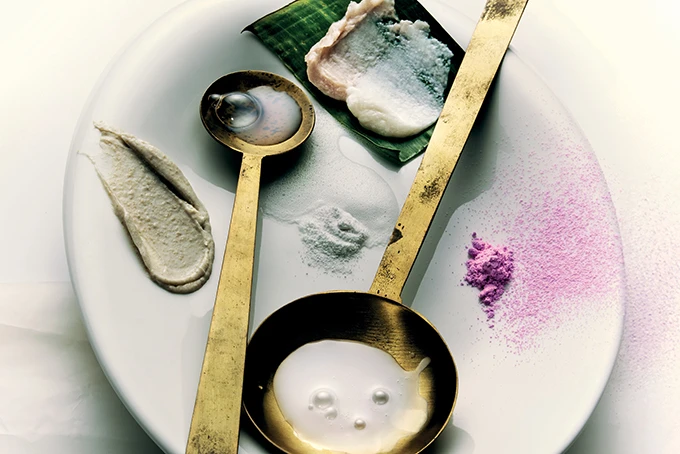
Fermentləşdirilmiş düyü Şərqi Asiya gözəllik mədəniyyətində dərin köklərə malikdir. Həm Yaponiyada, həm də Koreyada düyü uzun müddətdir dəriyə qulluq rituallarında istifadə olunur və dərini yumşaltmaq, parlaqlaşdırmaq və bərpa etmək qabiliyyətinə görə qiymətləndirilir. Koreyada fermentləşdirilmiş düyü suyu, tonunu və teksturasını yaxşılaşdırmaq üçün istifadə edilən Qoryeo sülaləsinə gedib çıxır. Onun işləmə səbəbi, düyünü daha kiçik, daha bioloji cəhətdən əlçatan molekullara parçalayan və vitaminlərini, amin turşularını və minerallarını dərinin daha asan mənimsəməsini təmin edən fermentasiya ilə bağlıdır.
"Tərkib hissəsinin hər bir hissəsindən istifadə etmək Koreya ənənəsinin bir hissəsidir, buna görə də durulama suyunun dəriyə qulluqda yer tapması təəccüblü deyil", kosmetolog Su-Young Kim Abrams inqrediyentin mədəni əhəmiyyəti haqqında deyir. Fermentasiya kimçidən soya paxlasına və dənli bitkilərə qədər eyni dərəcədə dərindən mənimsənilib; əvvəlcə konservasiya üçün istifadə edilən bu düyü indi Koreya sağlamlığının mərkəzidir. "Dərinizə düyü suyu istifadə etmək təsadüfi şəkildə ötürülən şeylərdən biridir. Ananız sizə deyir, anası ona dedi. Bu, rəsmi ritualdan daha çox gündəlik müdriklikdir."
Bütün bunların son məqsədi, tez-tez şüşə qabıq adlandırılan şeydir - K-beauty-nin tanıdığı hamar, şəffaf, içəridən işıqlı bir görünüş. Fermentləşdirilmiş düyü tərkib hissələri bir çox tələblərə cavab verir, buna görə də onlar şüşə qabıqla bu qədər sıx bağlıdır. Onların tərkibində tarazlığı qorumağa kömək edən prebiotiklər, yumşaq bir şəkildə aşındıran və parlaqlaşdıran fermentlər və süd turşusu və ətraf mühitin stresindən qoruyan antioksidantlar var. Fermentasiya zamanı əmələ gələn kojik turşusu dəri tonunu bərabərləşdirməyə kömək edir, amin turşuları isə nəm baryerini gücləndirir.