From banking and entrepreneurship to journalism, academia and higher education leadership, Professor Dame Heather McGregor has built a career defined by curiosity, courage, and an unwavering commitment to growth. A former banker and entrepreneur, an accomplished writer and broadcaster, a Financial Times columnist for 17 years, and a leading voice in business education, she has continually challenged the conventional boundaries of a professional life.
Today, as Provost and Vice Principal of Heriot-Watt University Dubai, Professor Dame Heather McGregor brings this extraordinary breadth of experience to a new generation of students, encouraging them to remain curious, build meaningful relationships, and never be afraid to rethink the path ahead.
In an insightful conversation with the Editor-in-Chief of Global Art Magazine, Ms Jamala Nakhchivani, Dr McGregor reflects on the factors who shaped her ambitions, the risks that transformed her career, the values behind her most unconventional decisions, and why, even after decades of achievement, she continues to set herself new challenges.
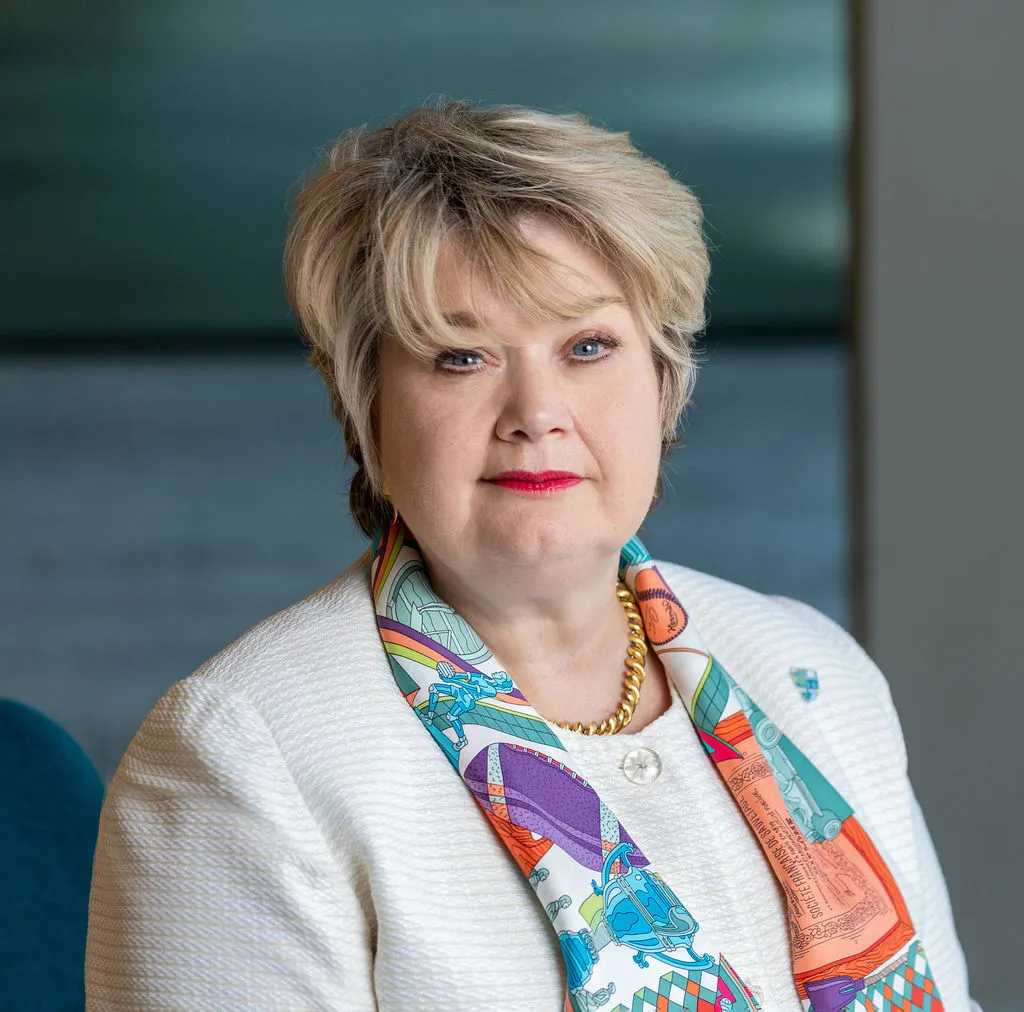
— Professor McGregor, it is a pleasure to meet you here! Your career has taken you through business, banking, journalism, academia and entrepreneurship, across the UK, Australia, Hong Kong, Singapore, Japan, and now the UAE. You have also written for the Financial Times for 17 years, earned a PhD from the University of Hong Kong, and held senior leadership positions in education. You are a truly multifaceted, diverse personality. What contributed to the formation of such a character? What were you like in your school years?
— Thank you! My interest was always business, even in my school years. I was 13, I had a very good economics teacher who explained to us the relationship between central bank interest rates, country debt, and government bonds, and I was fascinated by it. I think good teachers can have a lifelong impact on you. My number one spare-time passion is still reading business books. At the moment, I’m reading a book about NVIDIA. I wanted to study economics at university, but I chose something different. I studied agriculture, agricultural economics and agricultural marketing at Newcastle University in the UK. I studied food manufacturing, branding, selling and the whole supply chain from farm to plate.
That economics teacher at school was life-changing for me. I think that’s one of the reasons and influential moments I have always been interested in business and in understanding how things work.
— You have also never seemed afraid of changing direction. You moved between countries and industries, from communications and banking to journalism and entrepreneurship, and later into higher education. You were doing all of this while also raising a family and pursuing your PhD. What gave you the confidence to keep taking those bold steps, rather than following a single, predictable career path?
— I think I’m very ambitious. I wrote a book called ‘Mrs Moneypenny's Careers Advice for Ambitious Women’, so I speak to an ambitious audience. It's not that you have to be strategic, but you have to be ambitious. And actually, you are already doing three different things: you are a student, you are a businesswoman, and you are a journalist. This is one very driven woman talking to another very driven woman, but just many generations in between us. It is the same concept, you know? If you want to do something, you set your sights high. You need to aim for the stars if you want to reach the moon. You should always aim very high. Then even if you het three quarters of the way, you are still higher. So, I have always set myself a very high goal.
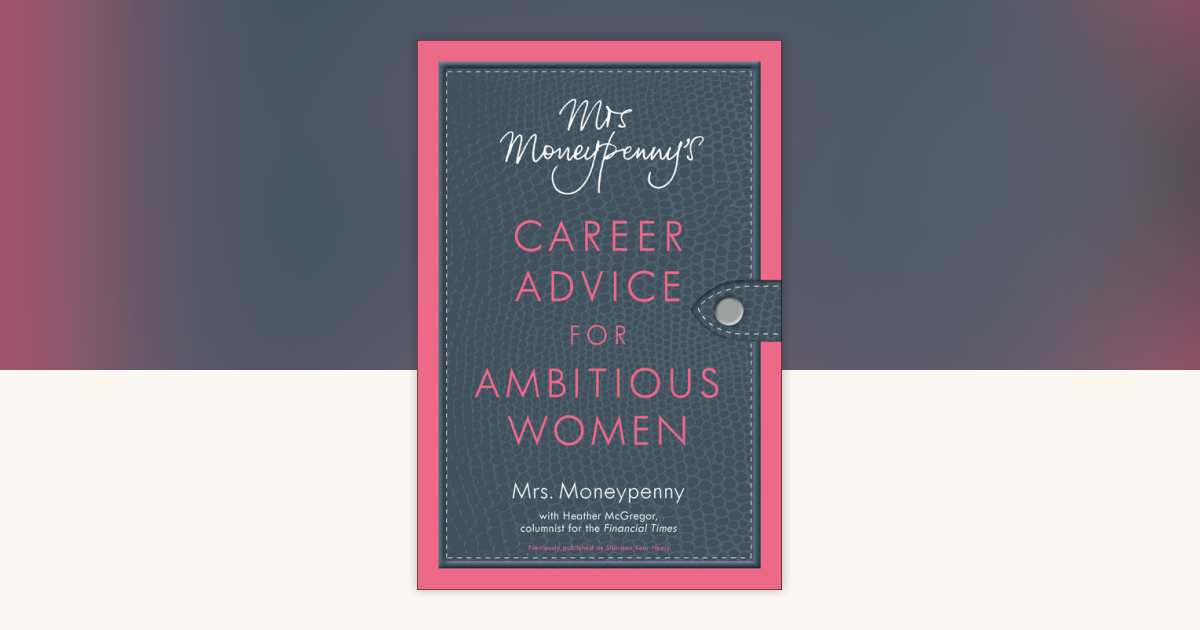
"Mrs Moneypenny's Careers Advice for Ambitious Women", by Professor Heather McGregor
I’ve repurposed my career many times. In my 20s, I worked inside companies in communications, explaining companies to the investment community. After some considerations, I decided that I actually want to work in bank rather than cooperate with it, so, I got an MBA at London Business School and worked in banking through my thirties.
In my 20s, I lived in Australia for a while, and in my 30s I lived in Hong Kong, Singapore, and Tokyo. In Tokyo, I had a lot of employees in the bank, I ran a large part of a bank. All these while having children, being a wife, and studying for my PhD at the same time. I would say, don’t try this at home, it is very difficult and crazy. I was trying to write this PhD, have children, take care of my husband, and make sure the bank was still running and making money.
I was living in Japan where I didn’t speak Japanese, and I was working for a Dutch bank when I didn’t speak Dutch, so in addition I had quite a lot of communication issues. Then, in October 1999, the Financial Times called me and said: "Would you like to write 900 words every week at the same time as all of these other things?" All of this was happening at the same time.
At first, I said no. I was worried that the bank would not support the idea that I have another job and writing about the bank. The Financial Times offered me a pseudonym, and for five years nobody knew it was me, it was a real secret.
— That’s fascinating! It is impressive to manage all these spheres of your life, to bring it together and make successful each of it. There is a very strong sense in your story: the feeling that you simply kept moving forward, didn’t stop even when circumstances were demanding or uncertain. Where do you think that drive came from?
— I don’t really know. I know that you have an amazing mother who sets the pace. I had a lovely mother, and I still have her. She is 97, so I hope she stays in good health. My mother never went to university. My father didn’t go to university either, and he left us when I was small. My stepfather had been to university, but he wasn’t ambitious. So, I don’t really know where my drive came from. I just didn’t want to sit still. I wanted to get going. I have three children, and I taught them to be more ambitious and to have good interpersonal skills, because communication is really important. You have to talk to people, engage with them, and build relationships.
Success isn’t always successful. I’m not a multimillionaire. Maybe I could have been a multimillionaire if I had stayed in banking, but I made decisions that meant I wasn’t as rich as I could have been. After banking in my 30s, I became an entrepreneur. Rather than start a business from the scratch, I bought a business when I was almost 40. I borrowed £1.8 million from the bank, which was about $2.5 million at the time. I sold my house, so I had no security, and we lived in a rented house. I bought someone else’s business because I could see the potential in it, while the owners didn’t have a lot of ambitions. So, I bought it, set the ambition high, and expanded it worldwide: San Francisco, London, New York, Hong Kong, Singapore and Frankfurt. It is still operating.
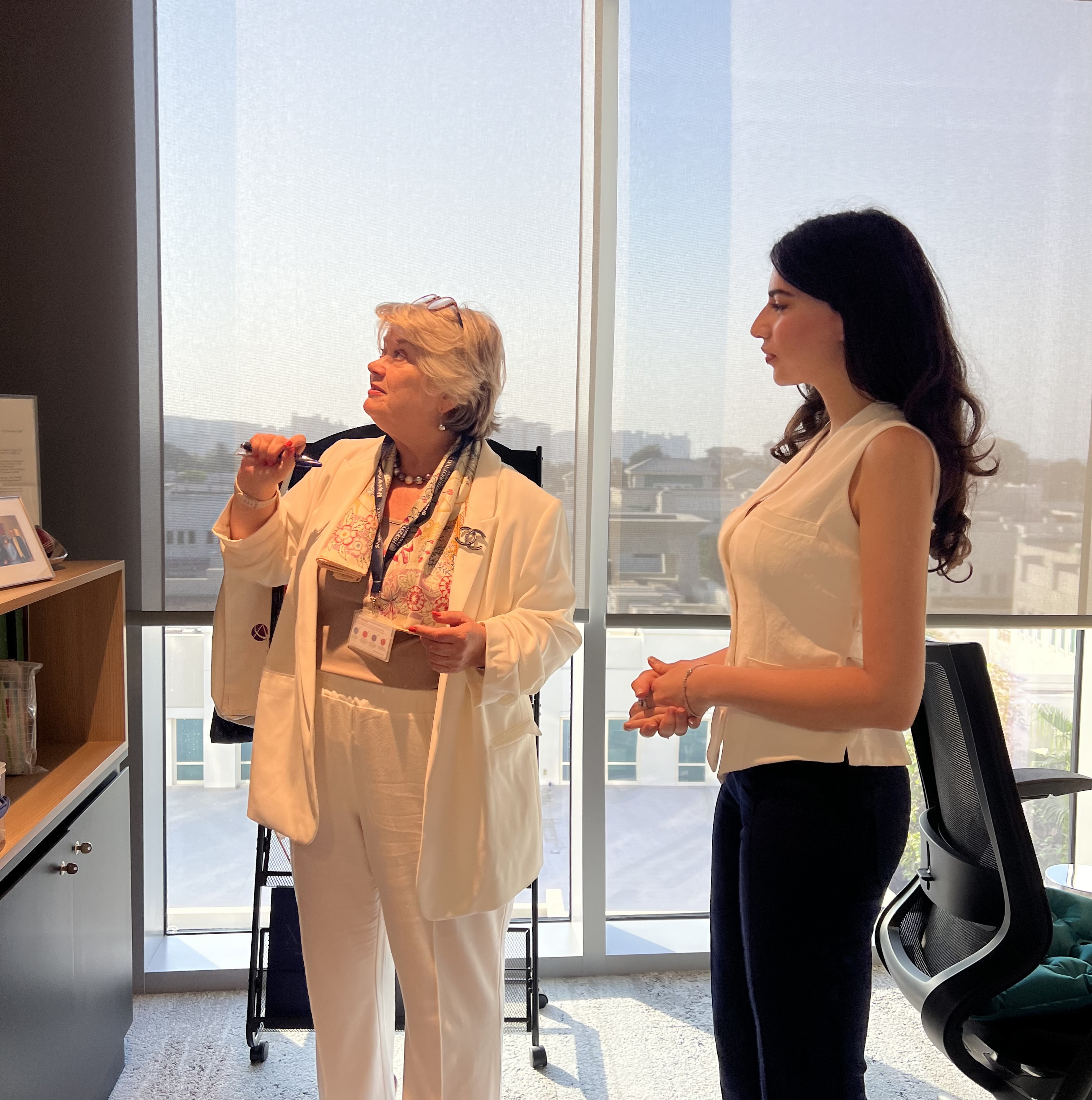
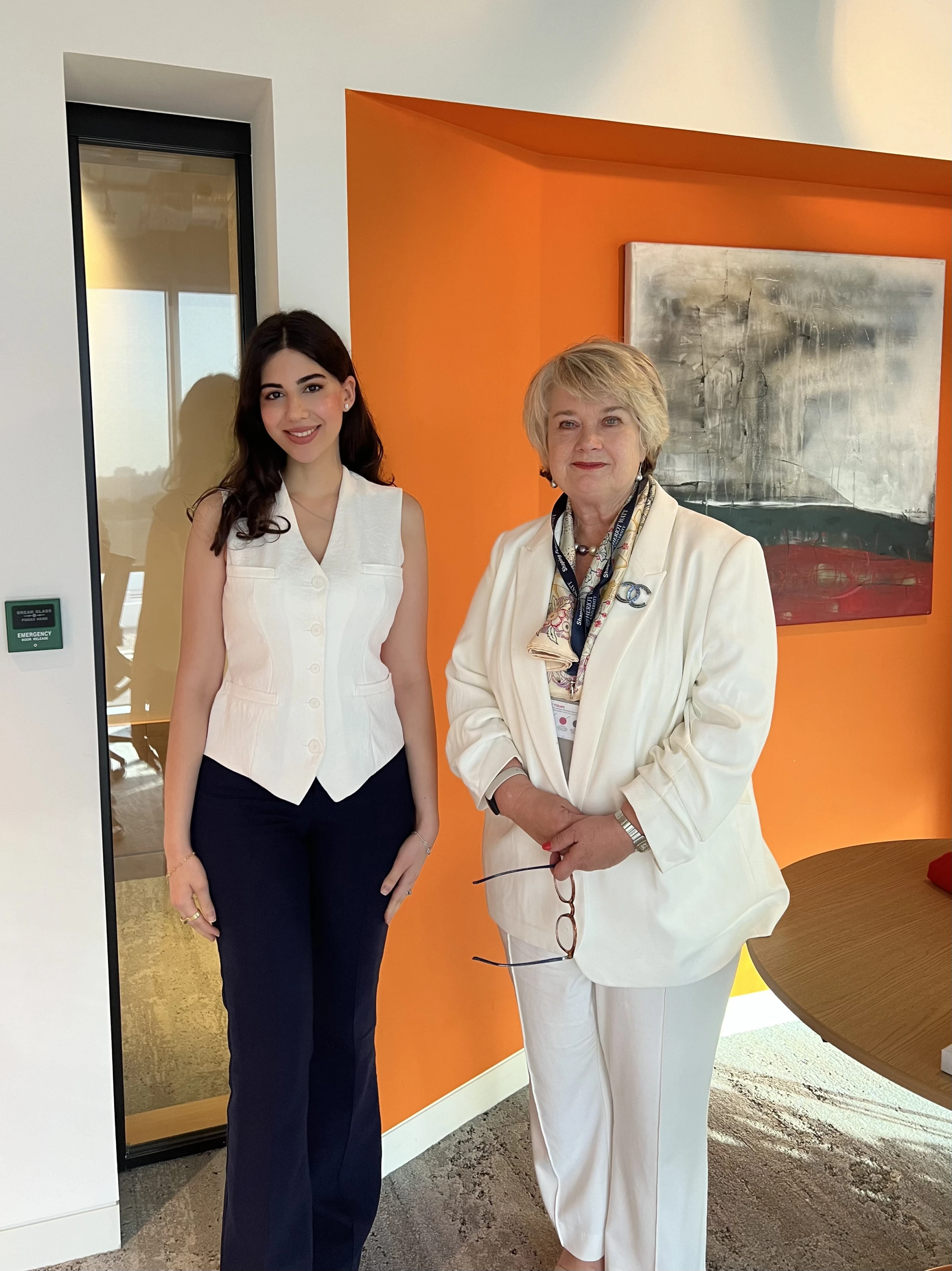
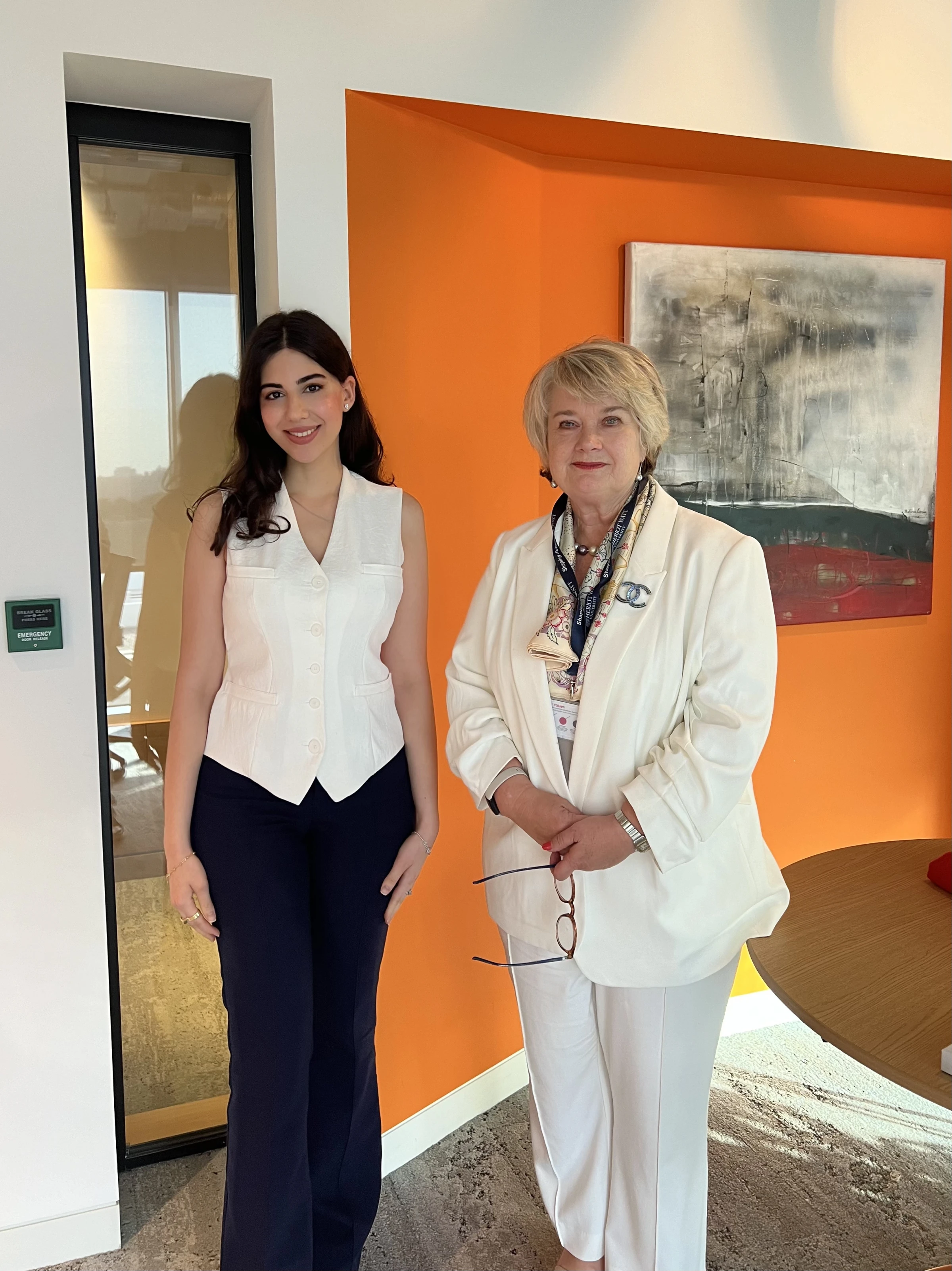
Professor Dame Heather McGregor and Jamala Nakhchivani, Editor-in-Chief of Global Art Magazine
After 16 years as an entrepreneur, I was approached by the Heriot-Watt University and asked to be the head the business school. I had to decide what to do with my business: should I sell it? It felt like my own child. And by then, I had also started my own charity to help young UK graduates from minority and immigrant backgrounds who were suffering because they didn’t have the opportunities or connections. We wanted to upskill them and help them get jobs. So, I was diverting much of the company’s profit to this foundation. Now, if I sell the company, I was worried that a buyer might not support the charity. So, I told my staff that I would go to Scotland to work for Heriot-Watt and leave them in charge for two years. I said that if they looked after the company and the charity, I would give them the company for free. My husband thought I was crazy, because I had spent £1.8 million on it. But I did it because I knew the staff would maintain the company’s values, and the charity would not survive if they had to borrow money to buy the business and then also fund the charity. Besides, when you are going to be the head of business school, you don’t want a failed business. After two years, the company had done very well. On 11 April 2019, I gave them the business. It was then worth about £5 million.
My husband nearly stopped speaking to me. He was worried that we would be poor in our old age. I said we might not be rich, but we wouldn’t be poor or starving, and many people are worse off.
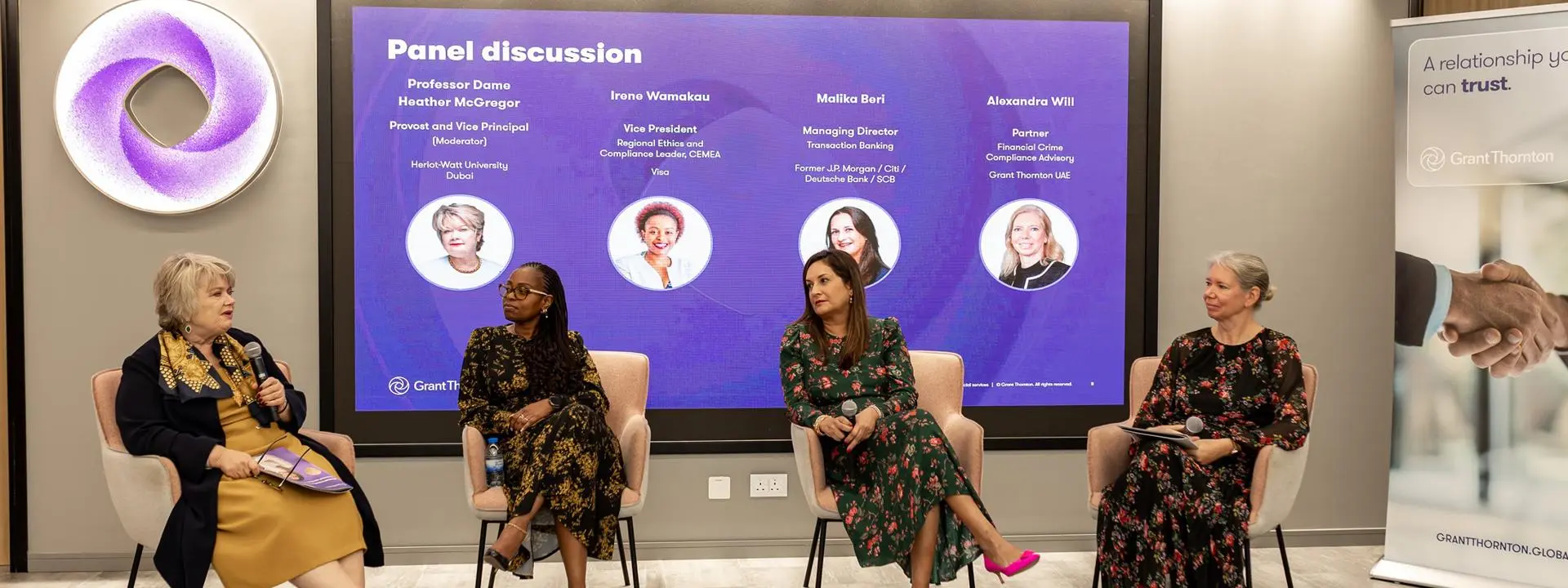
— So, in difficult periods in your life, rather than allowing a crisis to define you, you seem to create a new challenge for yourself. Is setting yourself a new goal your way of moving through uncertainty?
— In times of crises, I always like to set a new goal, a new ambition to focus my mind. I need to have something to take my mind off the crisis and focus on something else. During the 2008-2010 financial crisis, my business suffered. I cut my salary in half and said that at the beginning no one under 30 would be made redundant. I wanted to keep all the young people in company, so I had to say goodbye to some of the older people.
To avoid depression, I decided to learn how to fly an airplane. I went to the airport every weekend and learned it. Flying required total focus. When you’re learning to fly an airplane, you can’t think about anything else. I still have my license, and my children used to fly with me.
During COVID, another crisis, when I was at Heriot-Watt in Scotland, everything went online, and I found it really depressing. I couldn’t learn to fly again for second time, so I decided to qualify as an accountant, which was something I had always wanted to do. I studied for more than two years, took five exams, and completed a large professional achievement document. I qualified as an accountant three weeks before my 60th birthday. We can say that challenging yourself and never-ending love and passion for getting new knowledge and new skills.
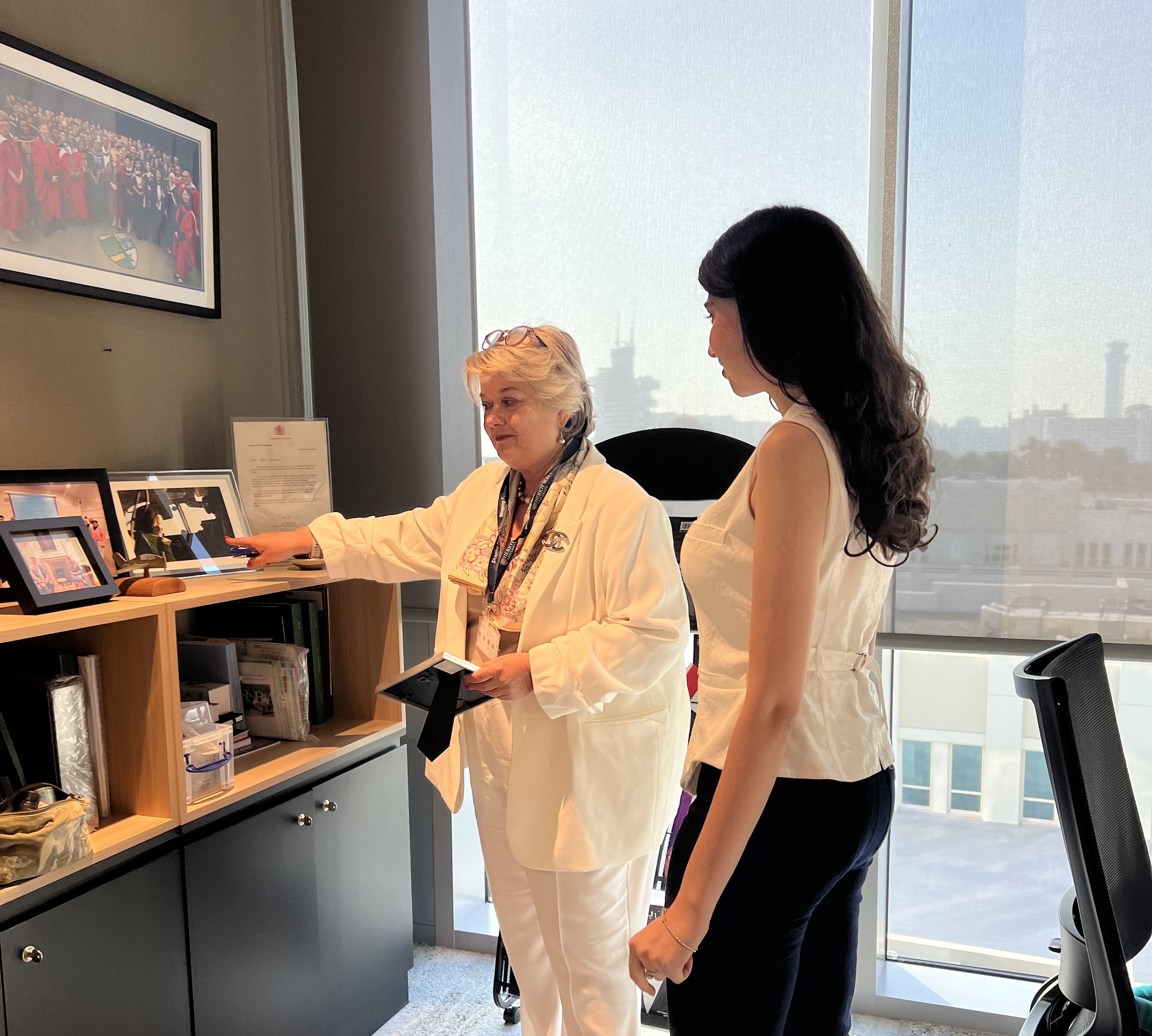
Professor Dame Heather McGregor and Jamala Nakhchivani, Editor-in-Chief of Global Art Magazine
— As the Provost and Vice Principal of Heriot-Watt University Dubai, your current role extends beyond the Business School to the wider university, including engineering, architecture, and design. You organise interesting events, projects, various meetings with unique guests. You have created a strong educational program as well as a good developmental atmosphere. How do you see your role in shaping students’ experience and preparing them for the world beyond university?
— I had been in charge of the Business School in Scotland for six years, including the Dubai and Malaysia Business Schools. Coming to Dubai, I am responsible for everything, including engineering, architecture and design. We have 5,200 students. I can’t meet all of them, but I want to have an impact on their lives and give them great opportunities. I want to make a difference in students’ lives. I think the best way to do that is to make this the kind of place that people want to visit and to engage with our students. We have a strong track record of internships and jobs.

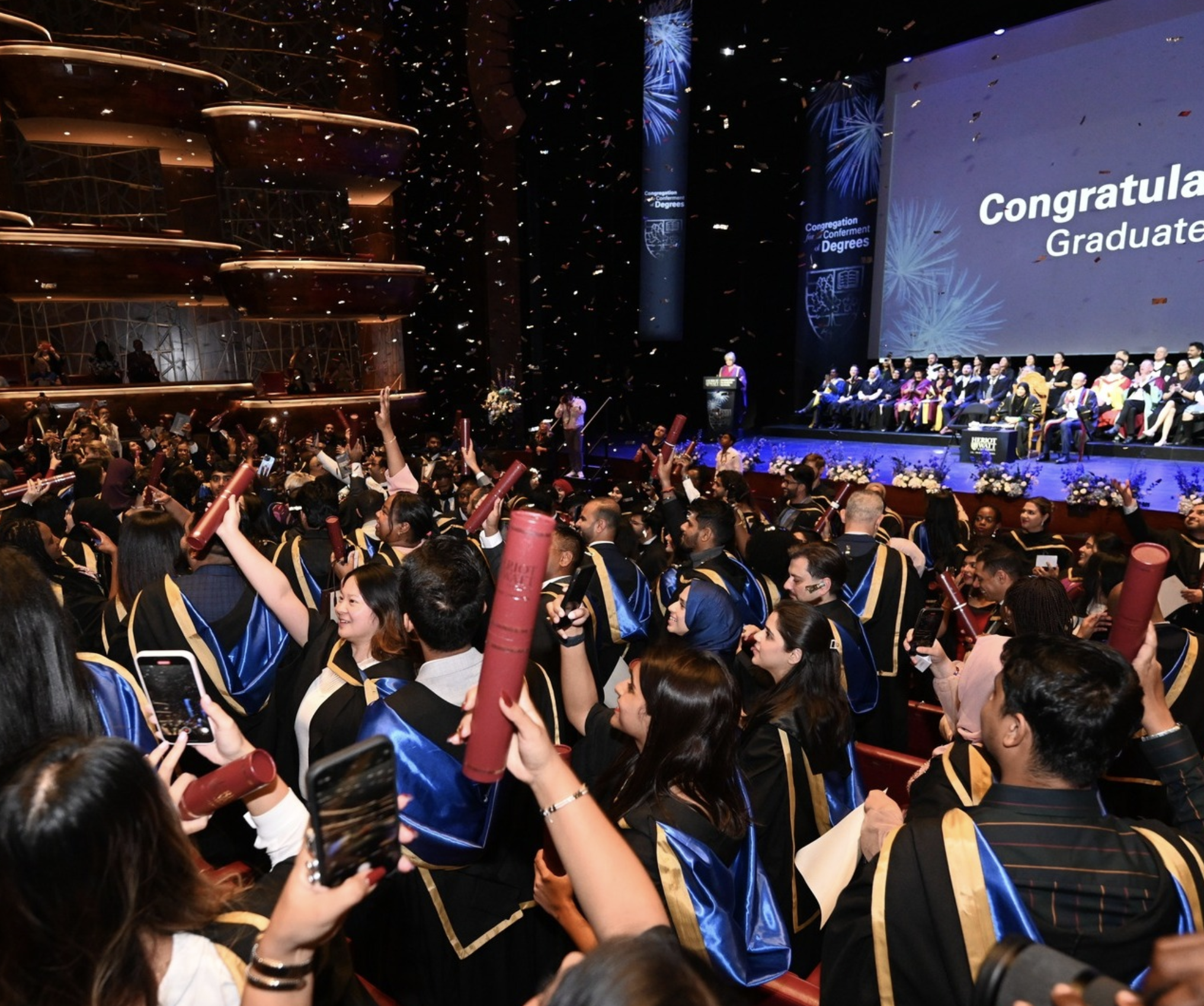
For example, we have an annual architecture show. UAE architects come and see the work of our students, and they often hire them before graduation because they have seen their work over the years. Getting more people to visit is important. I constantly invite people. This morning, I had breakfast with the head of Rolls-Royce Engines for the whole region, including Azerbaijan. I wanted him to come, talk to the students, and learn more about Heriot Watt. Most people think Rolls-Royce is only cars, but their engines are on many airplanes, almost half of the airplanes in the world. So, my job is to make sure the world comes to Heriot-Watt, meets our students, and can hire them.
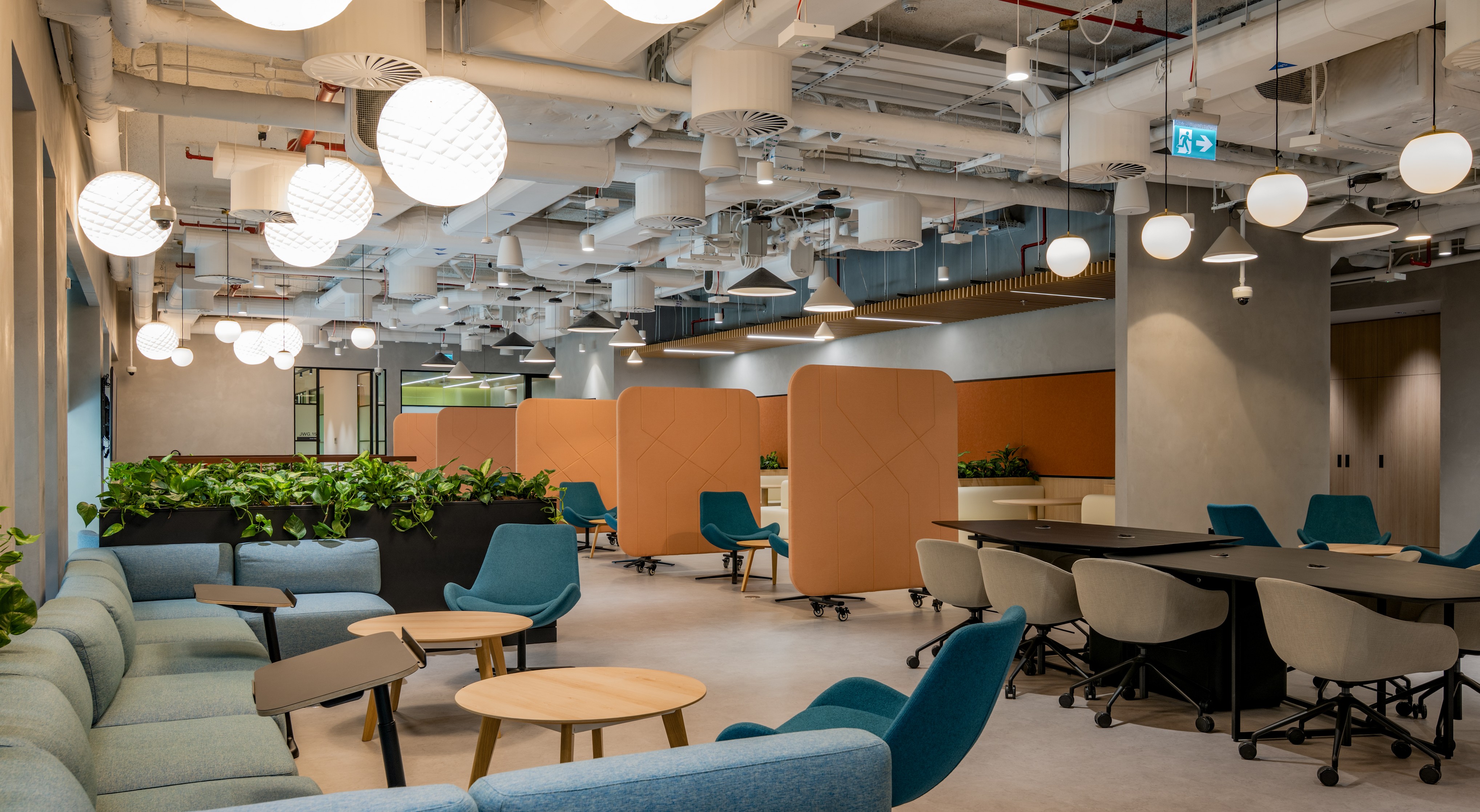
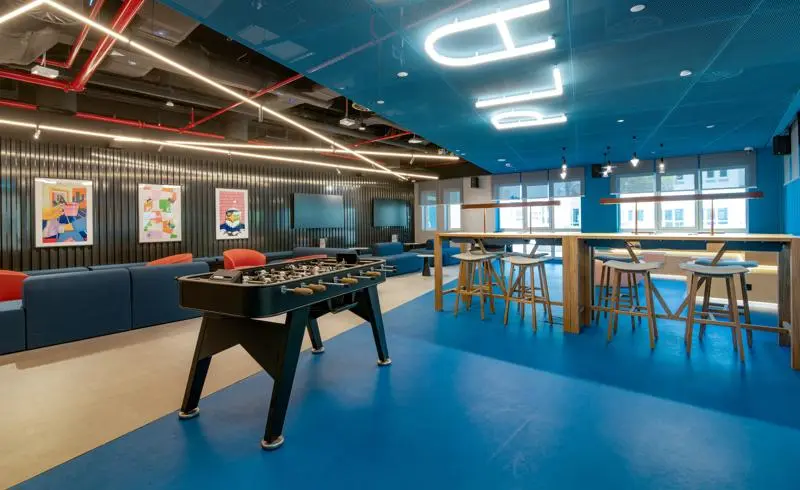
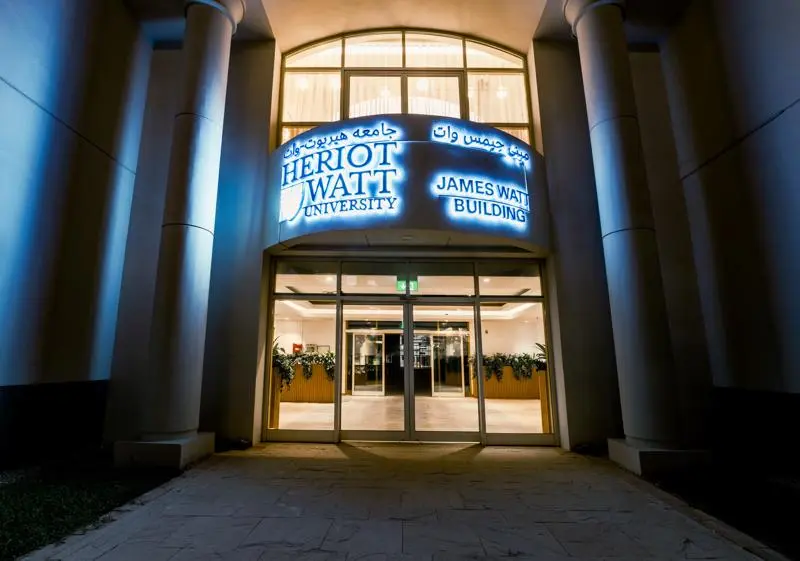
We have also opened the new James Watt Building. It has been made much nicer, with more leisure and study rooms. Previously, as there wasn’t enough space, students were looking for convenient place, sometimes sitting on floors and in corridors. Now they have more room to study and spend time with their friends.
— Professor McGregor, you have seen the workplace transform dramatically over the course of your own career. What qualities and skills do you believe young people should develop now to remain relevant and resilient in the decades ahead? What would you advice young people?
— I think that today’s students face a very different job market, to when I was graduating from university. I don’t expect them to have one lifelong job. Careers change, like mine has changed. And it will keep changing into things we can’t predict now. We don’t know what the job market will look like 20 years from now. You need to be more resilient, and you need to be prepared to change jobs, and possibly to have periods of unemployment and periods of looking for a job. In a world of AI, application screening makes it important to stand out on your CV.
I would say, “Think about the ways that you could stand out.” One way is to get a professional qualification alongside their degree, internships and work experience, and extra credentials. I remember looking at the the CV of a 21-year-old girl who had an HGV, a lorry driving license. I thought that showed she was special. So, think about the ways that you could stand out.
And the other thing is, everyone needs an elevator pitch or an impact statement. If you are an architecture student, you might say, “I am committed to designing sustainability for the world,” for example. My own statement is: “I build relationships, and I build relationships in order to create opportunities for other people.” I make every member of our staff develop one, and we teach it to our first-year undergraduates. Everyone needs a personal statement that explains who they are and what their ambitions are.
So, you need an extra qualification, an internship and you need to be able to explain yourself well. If you are shy, invest in communication, in learning better how to talk about youself, and make sure that you can explain yourself well. Because in a world where you have to change job many times, you will need to have interviews many times. And with video job applications, for instance, you need to be able to speak about yourself.
— Finally, when a young person is standing at the beginning of their career, the challenge is often not simply choosing a profession, but understanding which direction genuinely suits them. What would you say to young people who try to find that direction, but afraid of making the wrong choice or stepping outside their comfort zone?
— Well… The recent speaker at Heriot Watt, Ed, was a good example (from editors: Mr Edward Hobart, the former British Ambassador to the United Arab Emirates). He wanted to be a lawyer when he entered university, but by the time he graduated, he no longer wanted to be a lawyer. I think even if people have decided what they want, they should always keep an open mind.
You have to ask yourself: do you really want to be a lawyer, for instance, or do you just want to work at a law firm because it seems like a good place to work? Obviously, law firms employ lawyers. But they employ also people in HR, marketing, finance, and many other areas.
If you want to work at Goldman Sachs, instead of going into investment banking, where a million people apply, find other roles at Goldman Sachs. Get inside, make a good impression, and you may be able to move. Young people should think creatively and not fixate on one job. It’s not like that anymore.
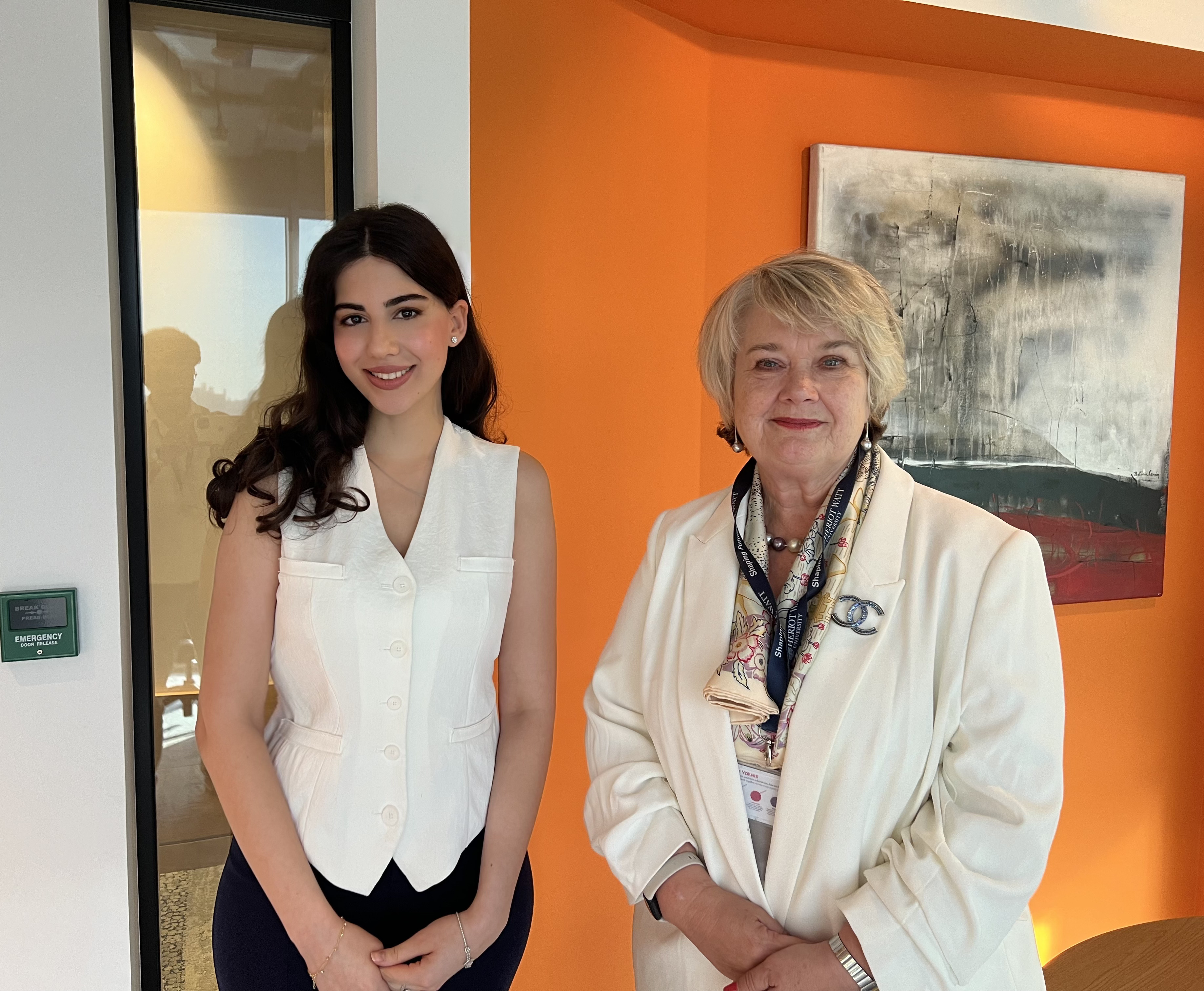
Professor Dame Heather McGregor and Jamala Nakhchivani, Editor-in-Chief of Global Art Magazine
— Dear Professor McGregor, thank you so much for this conversation! It was a pleasure! I wish you good health, success, and lots of energy to continue all your activity and brilliant projects!
— Thank you so much!
Interview was conducted by Jamala Nakhchivani, Editor-in-Chief of Global Art Magazine